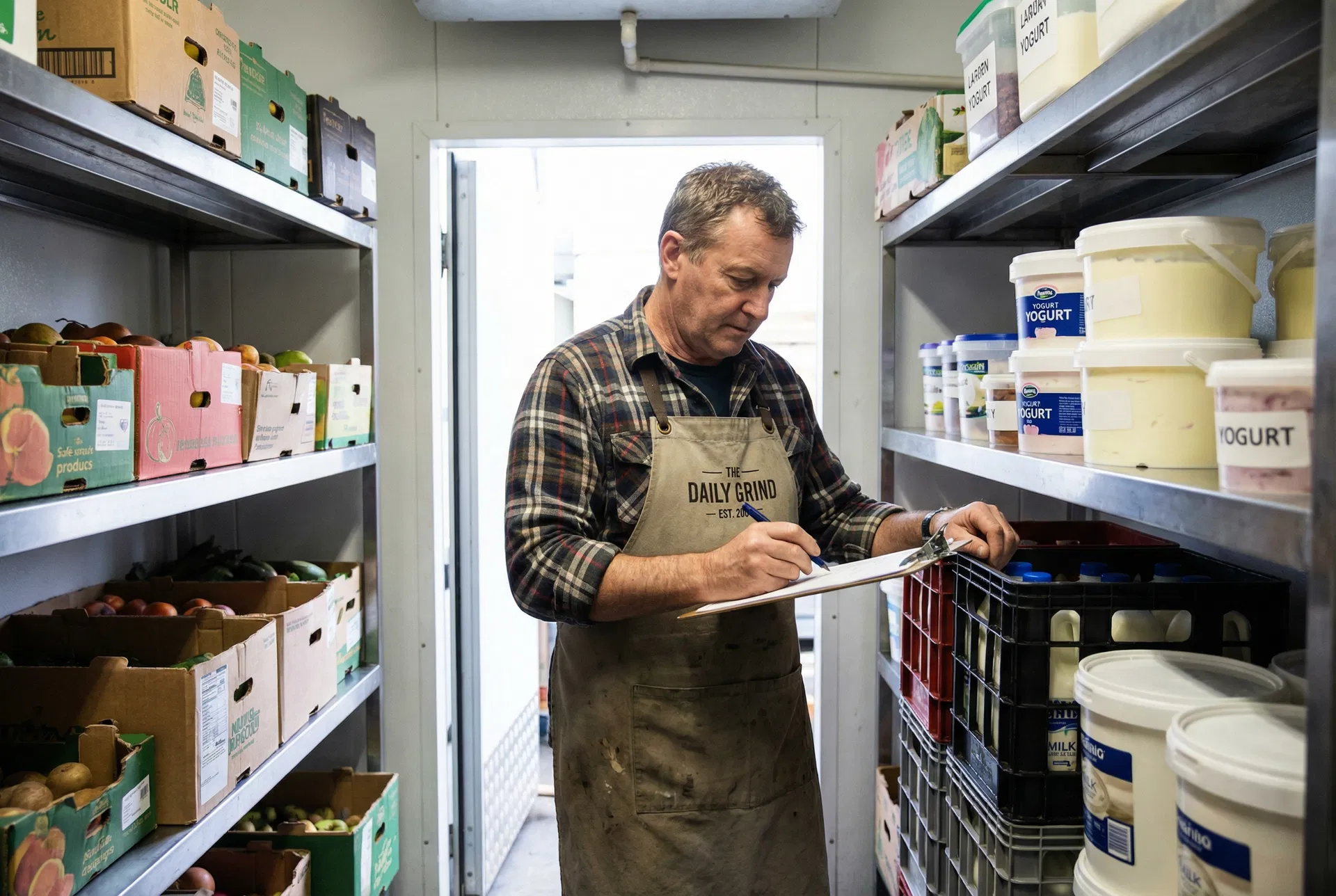

Do a Weekly Stocktake
A weekly stocktake is the foundation of good inventory management. It takes 20–30 minutes if you have a simple system, and it tells you exactly what you have, what you've used, and whether your usage matches your sales. Discrepancies between theoretical usage (based on sales data) and actual usage reveal waste, theft, or over-portioning.
Set Par Levels for Every Item
A par level is the minimum stock you need to have on hand at all times. Set par levels for every ingredient based on your average daily usage and your delivery frequency. If you use 2kg of coffee beans per day and get deliveries every three days, your par level should be at least 6kg plus a buffer. When stock drops to par, you order.
FIFO: First In, First Out
Always rotate stock so the oldest items are used first. This sounds obvious, but in a busy kitchen it's easy to grab the nearest item rather than the oldest. Label all deliveries with the date received, and train staff to always pull from the back of the shelf. FIFO alone can significantly reduce spoilage in fresh produce and dairy.
Identify and Address Shrinkage
Shrinkage is the difference between what you ordered and what you sold — it includes waste, theft, spillage, and over-portioning. A shrinkage rate above 5% warrants investigation. Common causes include staff meals not being recorded, over-pouring beverages, and produce spoiling before use. Track shrinkage weekly and address the root cause, not just the symptom.
Connect Inventory to Your Recipe Costs
The most powerful inventory management approach connects your stock levels directly to your recipe costs. When you know that each Eggs Benedict uses 4 eggs, 100g of ham, and 80g of butter, you can calculate exactly how much stock you should have used based on your sales data. Any significant variance is a red flag worth investigating.